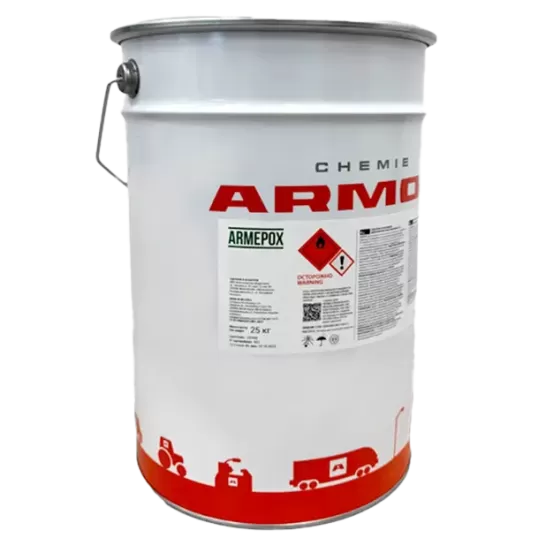
Two-component epoxy primer‑finish coating with high zinc content (≥80 %), providing cathodic protection of steel as the first layer in three‑layer anticorrosion systems.
epoxycathodic protectiondark gray
Two-component epoxy primer‑finish coating with high zinc content (≥80 %), providing cathodic protection of steel as the first layer in three‑layer anticorrosion systems.
Cold zincing is a method of corrosion protection for metal that involves applying a specially zinc‑filled composition (primer or paint) to its surface with a high zinc powder content, 80% or more by weight in the dried layer. The main principle of cold zincing is protective (cathodic) protection. Zinc is a more electronegative metal than iron (steel). Upon contact with an aggressive environment (moisture, oxygen), zinc first participates in an electrochemical reaction and corrodes, thereby protecting the underlying metal (steel) from deterioration.
Zinc‑filled composition must be applied directly onto clean metal; rust and old paint are unacceptable. Recommended cleaning level—no lower than Sa 2.5 per ISO 8501‑1 (grade 2 per GOST 9.402). Upon visual inspection
no alkali, rust, baked‑on residue, mold‑mixture residues, or other non‑metallic layers were detected.
Zinc dust content not less than 80% by mass in the dried coating.